Watercolor Mallard Duck Clipart: The Versatile Asset for Your Projects
There’s a unique charm to watercolor art that digital graphics often struggle to capture. The gentle bleed of pigment, the textured grain of the paper, and the organic, hand-painted feel evoke a sense of warmth and authenticity. This is precisely the magic that a high-quality Watercolor Mallard Duck Clipart brings to the table. It’s not just a simple illustration; it’s a piece of art that can transform your designs from flat and digital to rich and tactile. Whether you're crafting a brand identity for a rustic farm-to-table restaurant or designing whimsical stationery for a nature-loving client, this asset offers a blend of elegance and playfulness that’s hard to find elsewhere.
The Allure of the Hand-Painted Aesthetic
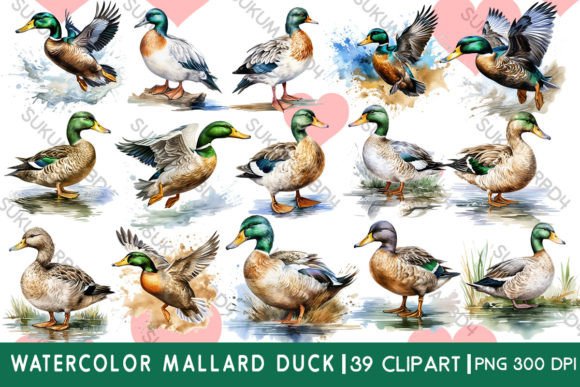
What sets this particular clipart apart is its artistic integrity. The mallard duck, with its iridescent green head and chestnut breast, is rendered with the nuanced layering and subtle color variations that define true watercolor. You can see the deliberate brushstrokes and the way the colors softly merge, creating depth and movement. This level of detail is crucial because it translates directly into perceived value. When your audience sees this kind of artistry in your logo, on your packaging, or in your social media graphics, they subconsciously associate your brand with care, quality, and a personal touch. It’s a powerful way to stand out in a market saturated with sterile, vector-based designs.
From Screen to Product: Practical Applications
The true strength of a versatile design asset is its ability to cross boundaries between digital and physical mediums. This is where the specifications of the Watercolor Mallard Duck Clipart file truly shine. Delivered as a transparent background PNG at a massive 4500 x 4500 pixels and 300 DPI, it’s engineered for both precision and scale. Let’s explore the real-world scenarios where this asset becomes indispensable.
- Brand Identity & Logo Design: For businesses in outdoor recreation, pet care, artisan food, or environmental consulting, a mallard duck can be a perfect mascot. Use the clipart as the central element of your logo, or incorporate it as a secondary brand mark on letterheads, business cards, and website favicons. The watercolor style adds approachability and artistry that a standard corporate icon cannot match.
- Packaging & Merchandise: Imagine this duck gracing the label of a gourmet duck sauce, the cover of a children's nature journal, or the design on a ceramic mug. The high resolution ensures crisp prints on everything from stickers and patches to t-shirts and posters. The transparent background allows you to layer it seamlessly over patterns, solid colors, or photographs.
- Print & Digital Collateral: Elevate your invitations, greeting cards, and wedding stationery with a touch of nature-inspired elegance. For digital creators, it’s perfect for social media graphics, blog post featured images, website headers, and even digital scrapbooking. The PNG format retains its quality across platforms, ensuring your designs look professional everywhere.
- Editorial & Marketing Assets: Content creators and marketers can use the clipart to illustrate articles about wildlife, conservation, or farm life. It can also serve as a captivating visual element in digital products like e-books, planners, or online course materials, enhancing engagement and visual storytelling.
Integrating Art into Your Design Workflow
Knowing where to use an asset is one thing; knowing how to integrate it effectively is another. The key is to let the clipart’s inherent style guide your other design choices. Because it’s a detailed, organic illustration, it pairs best with clean, simple typography. Consider using a sans serif font for body text to ensure readability, or a script font for headlines to echo the handcrafted feel. The goal is visual consistency—your typography should complement the art, not compete with it.
When building a brand around this asset, think about color. Pull the soft blues, greens, and browns from the duck’s plumage to create a cohesive color palette. This creates immediate brand recognition and a harmonious look across all materials. For packaging design, use the duck as a focal point on the front, and carry a subtle detail—like a single feather or a watercolor wash—to the sides or back of the box for a unified feel.
Always test your designs in context. Place your logo mockup on a business card and a website banner. See how the clipart looks when scaled down for a social media icon or blown up for a poster. Thanks to its high-resolution format, you have the flexibility to crop in on details or use it in its entirety without losing quality. This adaptability is what makes it a valuable piece of your design assets library, ready to be deployed across a multitude of creative projects.
A Final Thought on Authentic Design
In a digital landscape that often prioritizes speed and uniformity, choosing an asset with authentic, hand-painted character is a strategic decision. It communicates that your brand values craftsmanship and attention to detail. The Watercolor Mallard Duck Clipart is more than just a pretty picture; it’s a tool for building a more engaging, memorable, and professional visual identity. It bridges the gap between the digital convenience we need and the artistic warmth we crave, making it a truly versatile cornerstone for any designer, entrepreneur, or creator’s toolkit.