Timeless Textures: Bringing History to Your Digital Canvas
There’s a certain romance to aged paper—the way light catches the subtle fibers, the faint ghost of ink from a letter long forgotten, the warm, earthy tones that feel like they hold a thousand stories. For designers and creators, capturing that authentic, vintage essence can be a challenge. You want the character of an old scroll without the hassle of scanning fragile documents or spending hours in Photoshop trying to replicate the effect. This is where thoughtfully curated design assets become invaluable, offering a shortcut to that timeless aesthetic with modern convenience.
The Allure of the Antique in Modern Design
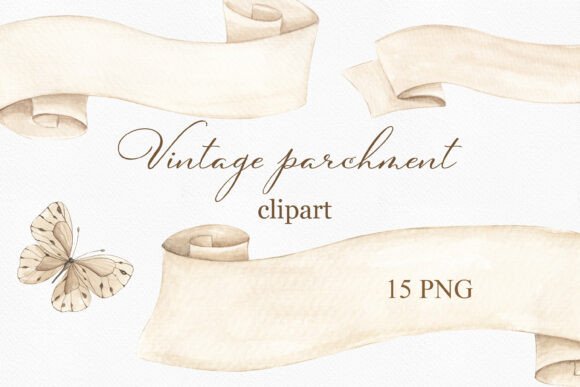
What makes a watercolor vintage parchment clipart so visually compelling? It’s the fusion of two beautiful, tactile elements. The watercolor aspect introduces soft, organic bleeds and a hand-painted quality, avoiding the rigid perfection of digital gradients. Paired with the parchment texture—its subtle creases, uneven edges, and warm, neutral palette—it creates a background that feels both artistic and historically grounded. This combination doesn’t just sit behind your text; it adds narrative depth and a sense of craftsmanship to any project. It’s a visual shorthand for tradition, elegance, and handwritten importance.
Imagine a wedding invitation suite. Instead of a flat, digital white, a soft, watercolor-stained parchment background immediately sets a tone of rustic elegance and personal touch. For a small business selling artisanal goods, packaging labels with this texture communicate handcrafted quality before the customer even reads the product name. It’s a powerful, non-verbal cue that connects with audiences on an emotional level, evoking nostalgia and authenticity in a world saturated with sleek, sterile graphics.
From Screen to Shelf: Practical Applications
The true value of a high-quality asset lies in its versatility. A set like this, containing 15 distinct old scroll clipart banners in PNG format with transparent backgrounds, is a workhorse for countless creative scenarios. Let’s move beyond theory and explore where these elements truly shine.
For Branding & Identity: A logo for a bookstore, a law firm, or a historical society can be anchored on a parchment banner, lending instant credibility and a classic feel. The texture becomes part of the brand’s story, suggesting depth and permanence. This approach is particularly effective for businesses that want to convey trust, tradition, and expertise without appearing outdated.
In Digital & Print Marketing: Social media graphics need to stop the scroll. A promotional post for a limited-time offer or a heartfelt announcement gains significant weight when presented on a vintage paper background. It feels more substantial and worthy of attention than a standard graphic. For print materials like posters, flyers, or menus, these textures add a layer of sophistication. A café’s daily specials menu on a parchment banner feels more curated and intentional.
For Content Creators & Publishers: Bloggers and website owners can use these banners as featured image backgrounds, section dividers, or pull-quote containers. They break up the monotony of a text-heavy page and guide the reader’s eye. For digital products like printable planners, educational worksheets, or recipe cards, a watercolor parchment background elevates the perceived value, making the download feel like a premium product.
Ensuring Your Designs Speak Clearly
While a beautiful texture is a fantastic starting point, its effectiveness hinges on one critical factor: readability. A stunning vintage background is useless if the text layered on top is difficult to read. This is where thoughtful design choices come into play.
First, consider contrast. The warm, often mid-tone nature of parchment requires careful font selection. A heavy, black serif font might work, but a dark brown or deep charcoal can feel more harmonious and less stark. For a more authentic look, consider a dark sepia tone. Always test your text on the actual background you plan to use—what looks good on a white artboard may get lost on a textured surface.
Second, the choice of typeface is paramount. A flowing script font might look beautiful for a single word like “Welcome” on a banner, but it will become a tangled mess in a paragraph. For body text or longer phrases, pair your vintage background with a clean, highly legible serif font or a simple sans serif font. The contrast between the ornate background and the straightforward text creates a balanced, professional, and modern typography hierarchy. Think of the background as the stage and the font as the actor—you need both to be excellent for the performance to succeed.
A Toolkit for the Thoughtful Creator
When you invest in a design asset, you’re not just buying a file; you’re buying time, quality, and creative potential. A well-assembled set of watercolor parchment elements should be more than just pretty pictures. It should be a practical toolkit.
The inclusion of 15 variations is a significant advantage. It allows you to maintain a cohesive look across a multi-page project—like a wedding suite with save-the-dates, invitations, and thank you cards—without repeating the exact same texture. The high-resolution 300 DPI ensures your designs will be crisp and clear whether you’re printing a small label or a large poster. And the transparent PNG format is non-negotiable for modern design workflows, allowing you to seamlessly layer these banners over other images, photos, or colored backgrounds without cumbersome editing.
Before you begin your next project, take a moment to review the styles you have. Does one have a more pronounced watercolor effect? Is another’s edge more torn and rough? Matching the specific character of the parchment to your project’s goal—whether it’s rugged and adventurous or soft and romantic—will make your final design feel more authentic and intentional. This mindful selection process is what separates good design from great design, turning a simple background into a core component of your visual communication.